“Ser, time na po sa PC 5!”—a muffled voice from the sidelines passes through my ears as I enter the zone, where it’s just me, the glowing monitor in front of me, and the keyboard under my fingertips.
My palms are sweaty, knees weak, arms are heavy, as I’m smashing down keys, while battling multiple opponents, hopefully to reach the top leaderboard. A crowd of kids gathers around me, mesmerized by my high skill level. Unaware of the remaining time I have, victory is finally within my grasp, and then suddenly…
The monitor flickers to black. I’m staring at my sweaty reflection on the screen, accompanied by the collective sounds of disappointment around me. The screen now switches to its default screensaver, reminding me that my time has ended.
I walk home, head straight to my bedroom, and finally lie down. I open my cracked phone, and tap the familiar silver square. This time, I’m not a fighter anymore; but a simple farmer. Roblox is a melting pot, where anyone can be anything with infinite possibilities. In one second, you can be a tycoon owner, a parkour master the next—or a pizza delivery guy trying to make ends meet for an in-game family. It is a digital sanctuary where millions of Filipinos escape their everyday lives and be whoever or whatever they want.
“Philippines, time na po!” – CICC and DICT, probably.
A few days ago, news about a different kind of “time out” swirled around the community. According to the Cybercrime Investigation and Coordinating Center (CICC), the “Ban Hammer” was set to fall on April 10 across the entire country as a result of Roblox failing to comply with safety protocols for its younger players. For a generation being raised in a digital world, one question is looming: where will we go once our servers have shut down?
For over a decade, Roblox has evolved from just being a game into a core part of our childhoods. Every computer shop or Pisonet you step inside has kids planting seeds in Grow a Garden, raising pets in Adopt Me, mindlessly grinding on Blox Fruits, or mowing down enemies at Phantom Forces, Arsenal, and Rivals. And then there’s the soul-crushing, nightmarish screams of someone falling from the final stretch of the dreaded Tower of Hell.
It doesn’t even stop there. Every home you step inside has kids glued to their tablets, laughing along with Pinoy Roblox content creators who have built a career out of digital bricks. For these creators, the platform is a livelihood; for the countless children who watch them, it’s a source of joy and entertainment that they can relate to because the humor, slang, jokes, and stories are uniquely Filipino.
Behind the colorful pixels, there’s a powerhouse lurking below, ready to pull the plug. The CICC, under the Department of Information and Communications Technology (DICT) has Roblox in a chokehold, due to persistently not addressing safety concerns for its younger audience. With scamming, cyberbullying, and predatory behaviors operating right under their noses, the DICT is now aiming its red dot sight directly at the platform. Where kids see neon colors and bright shades, the government sees shadows roaming around within chatrooms—ready to prey on vulnerable targets. For too long, the platform has been notorious for failing to shed light on safety and security gaps, and now the ‘Ban Hammer’ is ready to strike.
Earlier this year, the government proved it won’t hesitate to bring down the ‘Ban Hammer’ on any platform it deems dangerous for Filipino citizens. X’s (formerly Twitter) Grok AI was temporarily suspended for enabling the generation of explicit content using deepfakes, only resurfacing in our digital waters after implementing non-negotiable safety measures. Now, the government also has its crosshairs on Telegram, a messaging titan under siege for becoming a portal for spreading explicit content and illegal activity.
“Kuya, paextend!” — The Philippines, probably.
After a long and winding battle, their prayers have finally reached the ears of the digital gods. A verdict has finally been placed: the final nail in the coffin won’t be hammered. Following the high-stakes meeting on April 7 with the CICC and DICT, Roblox will remain accessible in the Philippines. In its compromise, the platform has committed itself to strengthen its safety protocols, and just recently, on April 12, launched a nationwide information campaign for parents to learn how to navigate the blocks and monitor their children.
The air is no longer heavy with the fear of a blackout, but the government is urging the parents to closely keep an eye on their kids. With Roblox finally staying, so are the careers of Filipino developers who typed their dreams into lines of code. Their hard work won’t be erased—at least, not now.
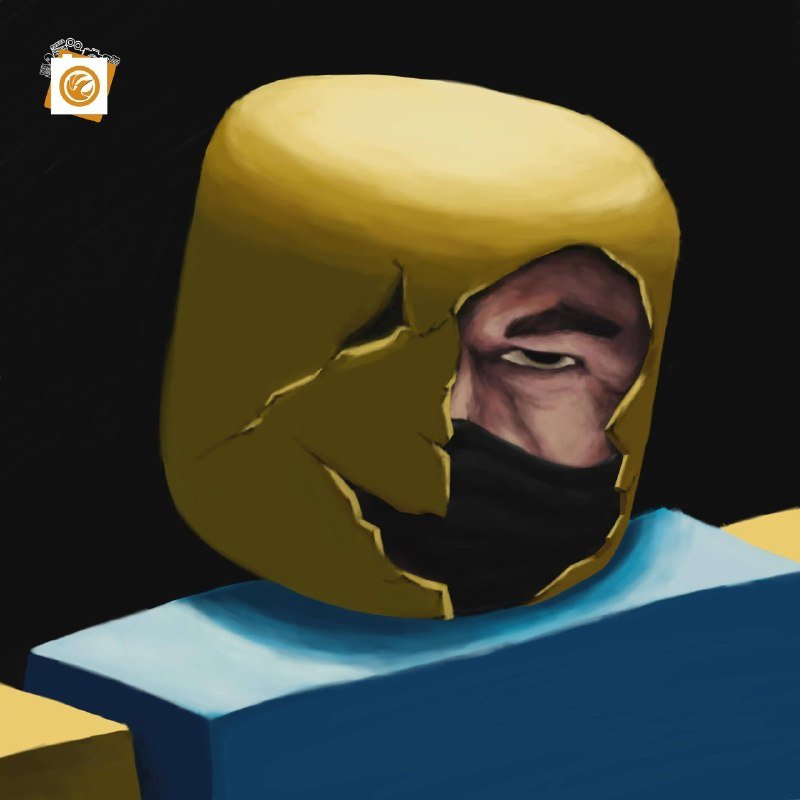
After all is said and done, Roblox will always be our blocky buddy that stayed alongside a whole generation. If it’s gone, then what now? Will there be another platform that surpasses the one that made us feel every emotion known to man—from the excitement of battling someone at high stakes, to the fear of being jumpscared in a haunted hotel, to the frustration of a disconnected server? Or will its memory simply collect dust in the archives of our digital history? Roblox may be an insignificant part in the grand scheme of our nation’s timeline, but for millions, it will always be a vibrant and refreshing oasis in the middle of a Philippines-shaped desert.
Illustrated by Prince Lloyd Sebuco