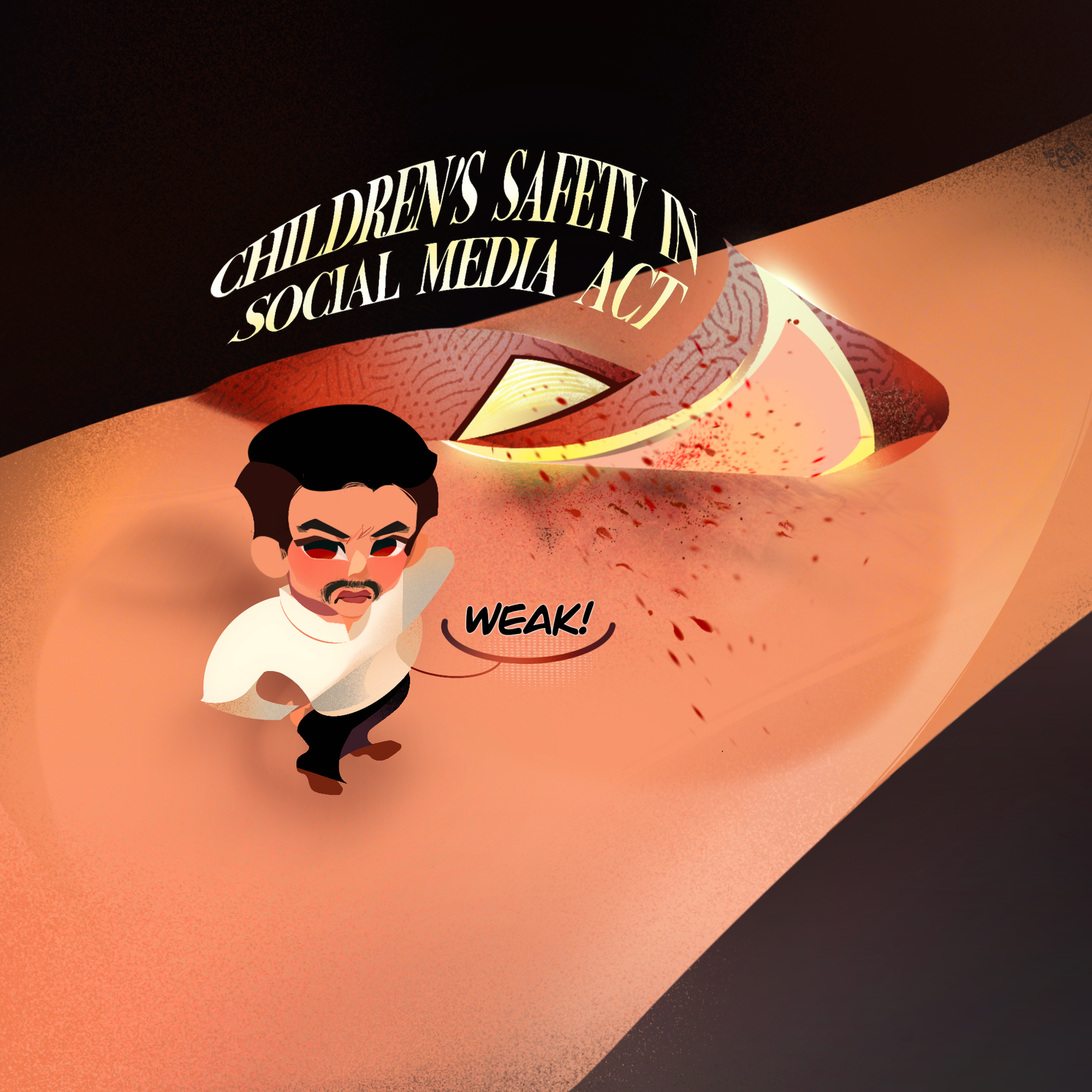
“You are weak.”
Those were the words of Senator Robin Padilla during a session of the Senate Committee on Public Information and Mass Media on February 11, 2026. The discussion was about proposing the ‘Children’s Safety in Social Media Act’ that aims to protect the mental health of children online. Sen. Padilla said that their generation “did not cry easily” and the word “depression” was not common, unlike today, where children frequently refer to themselves as depressed.
But can the youth be blamed for struggles rooted in an already broken system?
Redefining Strength
Sen. Padilla’s statement comes from a generation whose idea of “strength” is one associated with emotional endurance and silence. In the past, toughing things out and prioritizing others over personal feelings were seen as the primary forms of strength. But that’s not the case today; society has come a long way in forming a new kind of strength through awareness and advocacy.
Change is constant, and cultural perspectives are gradually changing.
With the influence of social media, people are more interconnected than ever. Mental health is given greater importance, and people nowadays are more willing to speak up and not blindly follow norms. To overcome the struggles of the modern era, what the older generation sees as a weakness may also be a new kind of resilience that has emerged today.
Different Generation, Different Struggle
To understand this issue, it is important to recognize that each generation is shaped by the circumstances of its time. Political instability back then was more prevalent; it was accompanied by fear and limited freedom of expression. Furthermore, economic hardships that resulted in high poverty rates and limited job opportunities pushed people to fight for survival. It should also be pointed out that society back then was heavily influenced by traditional gender expectations. This led to the practice of emotional restraint and a “Family first” mindset at the expense of personal well-being.
At present, the youth are born into and fully immersed in the digital age. This increased awareness of mental health conditions, but also created an open space where both positive and negative engagements exist. First off is the toxic social media culture, where online judgement is more prevalent and constant comparisons misshape standards, along with cyberbullying, which is further increased by high online engagement, especially behind the safety of anonymity. Lastly, people face economic uncertainty today, including inflation and rising cost of living. It is also worsened by job market instability and underemployment, where the skills you train for don’t even match the work you’re doing.
Neither struggle is greater than the other because both just further emphasize how strength is formed across generations.
Generational Cycle
Adults blaming the younger generation is a recurring, exhausting cycle that is often rooted in nostalgia and a resistance to change. There is a perception of decline, with changes in social norms or the absence of the challenges the previous generation faced, leading to the view that youth is “worse” or “having it easy.” Generational bias further deepens this perception, as the presence of social media and its engagement downplays the new generation.
Even the previous generation was not exempt from this, with their predecessors coming from a time of reconstruction caused by World War 2. Comparisons were also made back then, similar to what we are experiencing now, as the older generation would view the youth through their own standards and often overlooked the struggles and challenges the current generation faces.
Only by being open and acknowledging these differences can the cycle be broken.
Both Aware and Educated
While it is good to be aware of mental health conditions and their challenges, we must also be educated on what these are and how the terms are properly used. Sen. Padilla mentioned that even kids these days claim that they are “depressed,” and this statement should also be acknowledged. Saying that you are depressed is not the issue; it becomes an issue when it is loosely used to describe a feeling that is different from depression. Depression is a mental health condition that greatly affects a person’s daily life and could sometimes lead to severe outcomes if not addressed. Feeling sad or disappointed does not equate to depression—these are normal human emotions that are often temporary.
But what about the term “depression” not being common during their time?
Not just in the past, but even today, many Filipinos are still reluctant to seek formal and professional help even when they experience psychological stress. A reason for this is that the older generation would not want to associate themselves with these medical terms due to cultural stigma, like being labeled as “weak” or “crazy”. Another is due to financial constraints that often discourage people, especially since therapy sessions are not just limited to one, and medication may also be required. Even though low-cost mental health services exist in the country, they are far from being able to address everyone in need. This lack of accessibility also shows the government’s lack of initiative in solving the problem effectively.
To ensure that people understand the proper use of mental health terms, improving education and awareness about mental health should be a priority. Events like World Mental Health Day and Mental Health Weeks already exist in schools to combat stigma and raise awareness. While this is not enough, it’s a start that should be further pushed so we can properly recognize mental health problems without underestimating their seriousness.
Bridging the Gap
The new generation does not have to bear its struggles alone; we have our parents and teachers to guide us. If even our elders sometimes cast us in a bad light, then the youth cannot be blamed for viewing their elders critically. But it’s also not the fault of either generation, as the focus should be on the broken system that continues to divide us.
The issue lied in a system that refused to listen—which resulted in failure by clinging to pride instead of progress. Sen. Padilla’s statement lacked respect and nuance, but we can take this as an opportunity to shed light on the issue.
In order for a discussion to happen, you must first be open to listen. With an open space for discussion, we must open our hearts and minds to the struggles of the youth and understand our differences to bring these changes to the next generation. Because listening is the bare minimum of respect, which is a collective responsibility of ours in order for change to take place.
To do all these things is to improve society—and to take one step closer in breaking the cycle that’s been plaguing us for a long time.
Illustrated by Ma. Ysabelle Villacorte
REFERENCES
ArapahoeTim. (2024, January 8). Generational Blame: A Brief History. Arapahoe Libraries.
Sarapa, R. (2024, February 29). On Generational Bias. The Uproar.