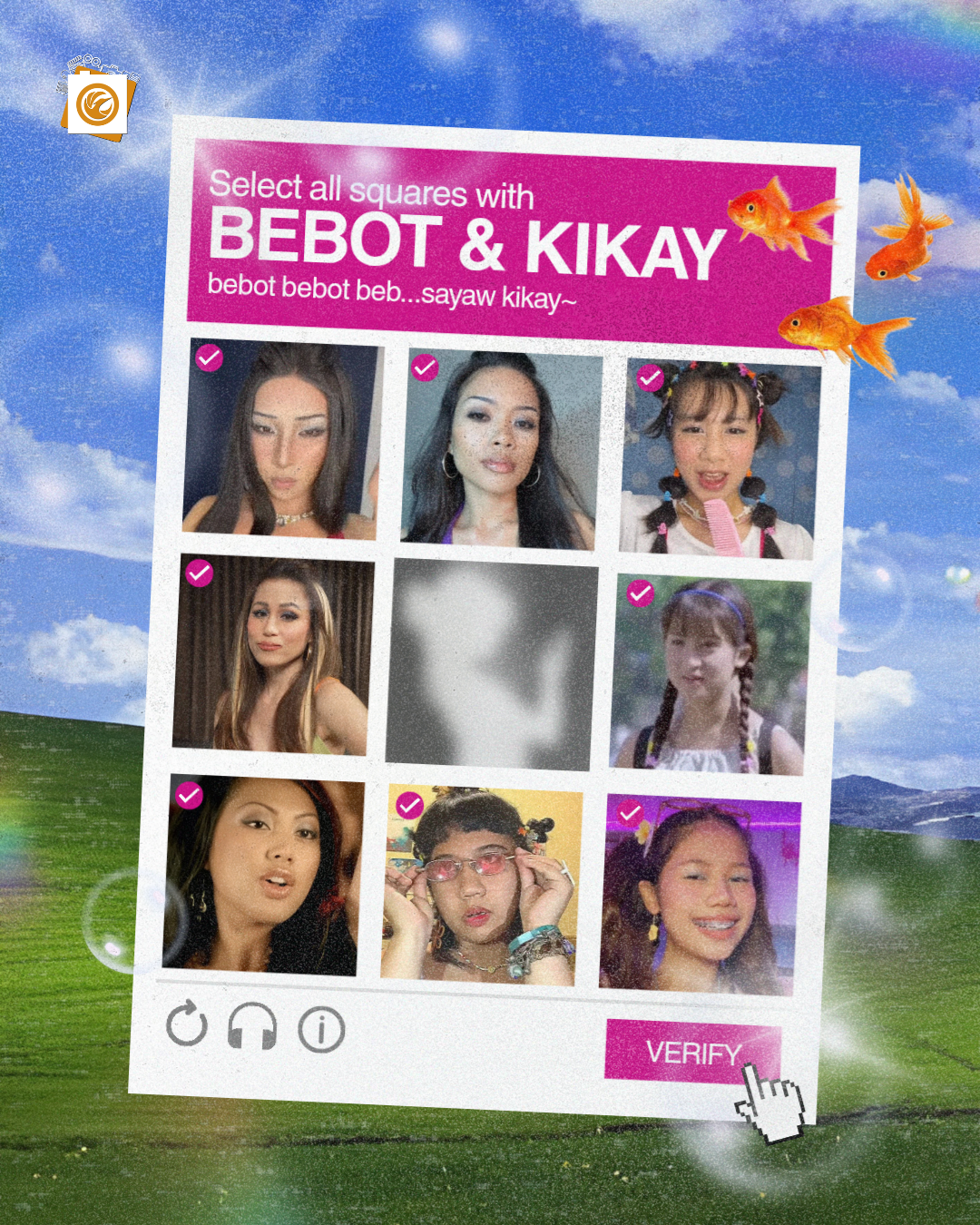
Just two months into 2026, TikTok is already flooded with Filipinas embracing the Bebot and Kikay trends. From smoky dark eyeshadows and dark lipstick, to glossy lips and pink accessories, social media feeds have transformed into colorful displays of self-expression. At first glance, it is another passing aesthetic in online culture. But look closer: this is not just about trends. It is a reclamation.
For years, the words bebot and kikay carried undertones of mockery. Bebot sometimes carried connotations of being too pa-cool, while Kikay was used to describe as too maarte. These labels placed Filipinas into narrow boxes, reducing their personalities into stereotypes. They were playful on the surface, but judgmental underneath.
Today, however, something has shifted.
Bebot: Early 2000s Pinay Glam Reborn
The Bebot trend started in late 2025 and early 2026 as TikTok users began tagging makeup transformations with #bebot. Videos typically begin with a bare face before transitioning into the classic signature look: smokey cool-toned eyeshadows in silver or bluish-gray hues, sharply defined eyeliner, thin drawn-on brows, visibly lined glossy lips, and early 2000s styling—hair poufs, big earrings, and spaghetti or halter dark colored tops. The trend started in Tiktok by content creator Belle Pauleen (@bellepauleen) who captioned her video with “Bebot is just Filipina Baddie but in Tagalog 🙂↕️.” Additionally, content creator Monique Libres (@monique_libres), who also captioned “Did someone say historically accurate bebot?”
The term “bebot” originated in the 1980s Filipino slang, it has no direct translation but it can be translated to “babe,” “hot girl,” or what today’s internet might call a “baddie.” The word gained global recognition through “Bebot,” a track by the Black Eyed Peas written by Apl.de.Ap. Performed entirely in Filipino, the song celebrated Filipina beauty and culture. For many, hearing this song evoked memories of childhood.

Kikay: A Girlypop
If Bebot channels bold glam, Kikay celebrates femininity in both its softest and loudest form. Pink blush, eyeshadows, and lips, with layered accessories and playful hairclips. Much of TikTok’s current Kikay wave draws inspiration from Jolina Magdangal, the late 90s and early 2000s pop culture icon, often hailed online as the “OG Kikay.” Similar to the Bebot trend, Kikay transformations often begin with a bare face before transitioning into a fully styled pink, girly glam, with a background song of “Sayaw Kikay” by Viva Hot Babes, adding a nostalgic and playful soundtrack to the makeover.
Creators like Ashley Garcia (@ashleyogarcia), Cheocean (@chengiloi), and drewbie (@drewbaysa) are embracing the kikay aesthetic, sharing playful clips, and channeling their inner Jolina-style. They’re capturing their videos with a touch of “historically accurate kikay” flair. Additionally, Bea Borres (@beaaaborres) also joined the trend, captioning her video “When you’re not a bebot, but a kikay girly 🍰🎀💗”

Beyond Bebot and Kikay, younger Filipinos are also reviving trends that defined the 2010s. The “Kakaibabe” aesthetic draws from the song “Kakaibabe” by Donalyn Bartolome, showcasing soft glam makeup: rosy cheeks, pink lips, and a sweet, youthful glow. Just like Kikay, but a simplified version.
Meanwhile, the “Diyosa” trend popularized through tracks by Yumi Lacsamana, features glow-up transitions–old photos evolving into the present day, while others follow the familiar transformation format: from barefaced to a makeup look that best enhances their features. Another variation recalled 2016 aesthetics, complete with flower crown filters just like the 2016 trends, with a background song Skusta Clee featuring Bullet D.
It is really worth remembering the aesthetic landscape of 2016: chokers, off-shoulder tops, heavy contour, dark foundation, and Instagram-perfect brows dominated. Ideal beauty in that era often leaned toward Western influences, subtly reinforcing Eurocentric standards—fair skin, sharp features, muted tones. The difference today is noticeable. Instead of imitating, Filipinos are reclaiming. Instead of adapting to international standards, they are embracing their beauty standards and features.
The Bebot-Kikay-Kakaibabe-Diyosa trend allows creativity. You can be loud or soft, matte or glittery, street glam or a certified girlypop. Every shade, every feature, everyone belongs. What may appear as “cute” is quietly radical underneath. It dismantles colonial beauty standards by normalizing and embracing what has always been ours.
What is even more significant is how these aesthetics have moved beyond local spaces and gained international attention. Foreign creators joining the trend, celebrating looks inspired by Filipina culture. Filipina beauty is no longer adjusting to global trends. It is influencing them.
Whatever you are in these four makeup trends, 2026 proves one thing: Filipina beauty is not a single look. It is a spectrum–bold, diverse, and authentic.
Trends may die, and aesthetics will continue to transform, yet the confidence behind it is here to stay. In the end, it is not just about the trend. It is about embracing who you are and having the courage to define it as beautiful.
Illustrated by Ronn Eizen Villapando
References:
Kabacik, E. (2026). The Bebot Makeup Trend Taking Over TikTok. Wonderflaw.
https://www.wonderflaw.com/the-bebot-makeup-trend-taking-over-tiktok/
Olivar, A. (2026). Bebot Makeup 101: Everything You Need To Look Like A Filipina Y2K Baddie.
Cosmo.ph.
https://www.cosmo.ph/beauty/makeup/bebot-makeup-trend-a7992-20260212-bsc?ref=home_feed_1
Rodulfo, K. (2026). The “Bebot” Trend Is Deeper Than a TikTok. Substack.
https://kristinarodulfo.substack.com/p/why-the-viral-filipino-bebot-trend-matters