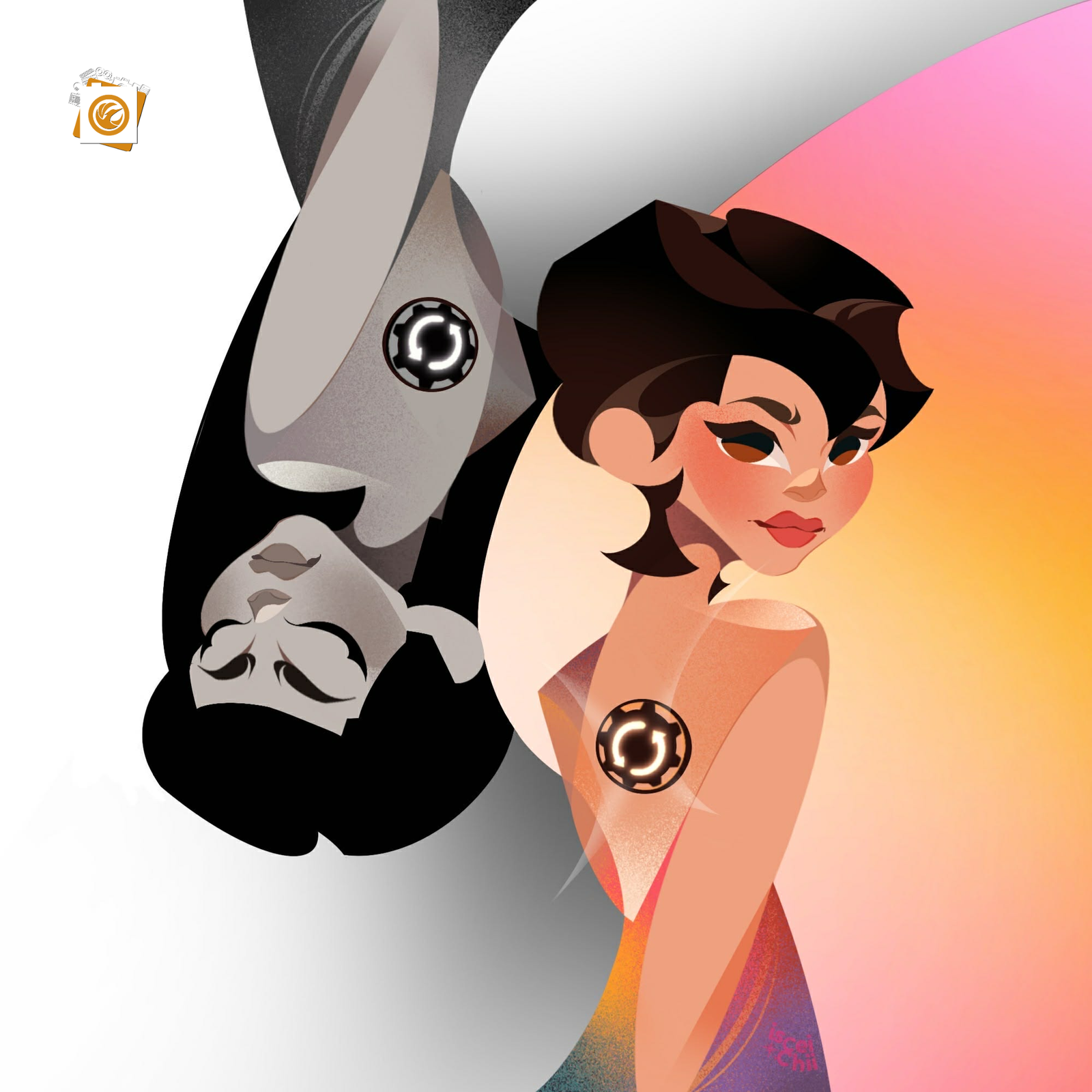
“Factory Reset”? This trend may seem harmless, but it reinforces the dangerous myth that queer identities can be changed — a belief that fuels stigma and erases real LGBTQIA+ experiences.
When we hear the term factory reset, we usually think of gadgets, such as phones, being restored to their original settings, with data erased and systems restarted. Recently, however, the phrase has taken on a troubling meaning through a Social Media trend called “Factory Reset.” In these videos, queer identities are portrayed as something that can be “fixed” or reversed, often by entering a heterosexual relationship. The trend even misuses Moira Dela Torre’s song “Titibo-tibo,” further reinforcing the idea that sexuality can simply be corrected.
What may seem like harmless online humor raises a serious concern: Is this still just a trend, or is it reinforcing harmful stigma against the LGBTQIA+ community?
The “factory reset” narrative suggests that being straight is the default and that queerness is a deviation that can be undone. This idea invalidates the lived experiences of LGBTQIA+ individuals, whose identities are frequently dismissed as confusion or phases. By framing heterosexual relationships as a “reset,” the trend promotes the misconception that sexual orientation is temporary and changeable.
The Philippines is considered a religious country, always preaching respect, acceptance, and love. Yet this becomes hypocritical when those same “religious” mindsets channel homophobia, often starting in homes—from families.
Recently, a hot topic from showbiz emerged as Broadway legend Lea Salonga’s son, Nic Chien, revealed that he is bisexual, saying, “I am okay with saying that out loud.”
Salonga has been vocal about her support for her son, even advising prospective parents against having children unless they are prepared to offer unconditional love, particularly if their child comes out as LGBTQIA+.
“If they come out to you—if they say ‘mom, I’m lesbian, bisexual, or trans,’ and under those conditions your love will stop, do not have children. Save yourself the drama and heartbreak. If hindi mo kaya, huwag na lang,” Salonga said.
As Lea Salonga also said, “Children are not customizable. Every kid is a blind box. You don’t know what you will get—but chances are it is the one you don’t want, but that is what you will get.”
This contradiction between faith and prejudice reveals that the real issue is not religion itself, but the refusal to practice the very love it preaches. Lea Salonga’s actions show what genuine acceptance looks like: love without conditions, faith without fear, parenting without control, and letting her son be who he wants to be. If Filipino society truly values family, respect, and compassion, then change must begin at home—by allowing LGBTQIA+ individuals to exist without having to deny, hide, or change who they are. The challenge for Filipino society is simple but difficult: to stop forcing them back into being straight, to stop believing that the “right” man or woman will bring them back. They do not need fixing—they’re not phones. Accept that this is who they are. Start learning how to offer unconditional love and acceptance, so they can live freely—not just LGBTQIA+ individuals, but all of us, free from shame, prejudice, and limitation.
Therefore, some people were still confused when Nic Chien, the transgender son of Lea Salonga, shared that he is bisexual. You see comments like “from trans man to bisexual real quick,” as if the two cancel each other out. Nic did not “change” anything. He only explained himself better—and honestly, that should be enough.
Sexual orientation is not a trend, phase, or experiment. It is a core aspect of identity formed through a deeply personal process of self-discovery. It cannot be erased or corrected by entering a relationship with someone of a different gender. To imply otherwise diminishes the authenticity of queer identities and reinforces long-standing stereotypes.
Part of the confusion surrounding this issue stems from misunderstandings about sexual orientation, gender identity, and gender expression. These concepts are distinct. Sexual orientation refers to who a person is attracted to. Gender identity refers to one’s internal sense of being male, female, both, neither, or somewhere along the spectrum. Gender expression involves how a person presents themselves through clothing, behavior, or appearance. For example, a man wearing a skirt does not automatically define his sexual orientation. Conflating these concepts fuels misinformation and prejudice.
The trend is particularly harmful to bisexual and pansexual individuals. Bisexual people have the capacity to be attracted to more than one gender, while pansexual people may be attracted to individuals regardless of gender identity. Their identities are valid and complete, not transitional stages waiting for a “reset.” Suggesting that attraction to a different gender cancels out queerness erases the legitimacy of their experiences.
As George M. Johnson writes in All Boys Aren’t Blue, “Love who you want to love, and do it unapologetically, including that face you see every day in the mirror.” This reminder underscores a fundamental truth that authenticity is not something that needs correction.
Queer identities are not data to be deleted. There is no system setting that restores someone to a so-called default. Queer people are not entertainment, punchlines, or temporary versions of themselves. They are real individuals whose identities deserve dignity and respect.
If there is any “factory reset” that needs to happen, it is not within queer identities but within the mindset that views heterosexuality as the only acceptable outcome. What society needs to reset are its assumptions—learning to understand, respect, and accept people for who they truly are, rather than pressuring them to conform.
The error is found: there is no factory to reset, queer identity is not a glitch.
Illustrated by Ma. Ysabelle Villacorte
REFERENCES:
The Trevor Project. (2026, January 20). Understanding Bisexuality: FAQs & Supportive resources.
Kandola, A. (2023, September 8). Differences between pansexuality and bisexuality.
All Boys Aren’t Blue Quotes by George M. Johnson. (n.d.).
Gender identity and gender expression | Ontario Human Rights Commission. (n.d.).
De Guzman, A. (2026, February 3). Lea Salonga’s son Nic Chien reveals that he is bisexual: ‘I am okay with saying that out loud’ | ABS-CBN Entertainment. ABS-CBN.
Licsi, A. (n.d.). Lea Salonga’s son Nic Chien reveals he’s bisexual. Philstar Life.
Understanding the Challenges Faced by Filipino LGBTQ+ Individuals with Strong Religious Ties – International Journal of Research and Innovation in Social Science. (n.d.).
Foundation for Media Alternatives. (2025, June 3). Chained By Misery in their Sanctuary: The Poor Treatment of the LGBTQIA+ Individuals in the Household.