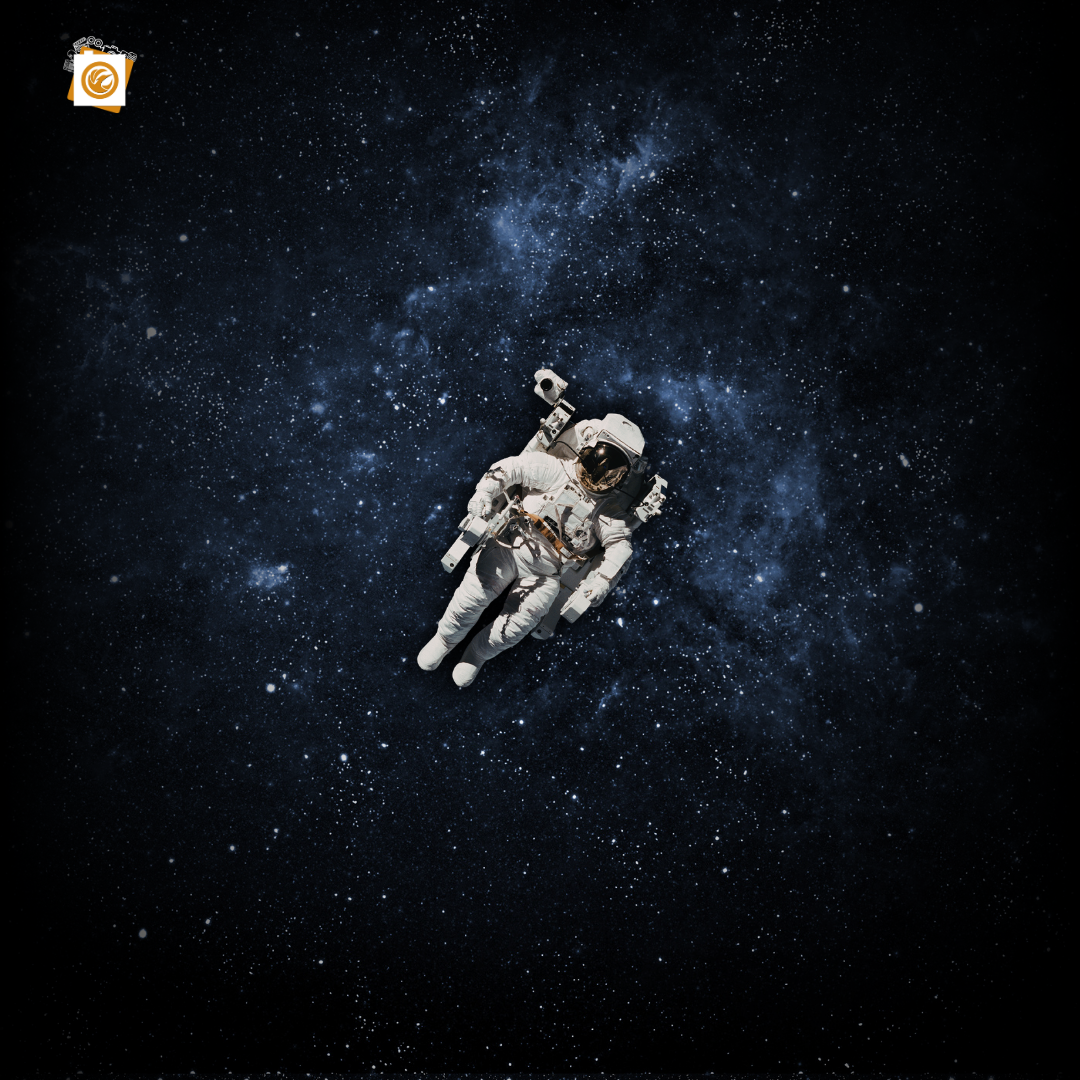
Space is scary, and we may be alone. Or we might be. There are over a billion galaxies in our observable universe, and only one is confirmed to contain life as we know it: the Milky Way. Inside the galaxy’s Orion Arm lies a star system containing countless asteroids, hundreds of moons, dozens of dwarf planets, eight planets, and one star. One of these planets, Earth, is teeming with human, plant, and animal life. It is situated within the Sun’s Goldilocks Zone, the right distance where it is neither too hot nor too cold for life to thrive. In what feels like a near-impossible coincidence, we are here—alive, drinking coffee, and wondering whether we are truly alone in the universe.
Over the course of decades, scientists and astronomers have been sending signals into space, searching for signs that other life forms might exist somewhere out there in its vastness. Our curiosity is insatiable. We are like small fish inside a vast ocean, calling out into the void and hoping for an answer.
Both possibilities are terrifying: either we are alone, or we are not. If someone answered, it would mean that other species exist out there, perhaps as intelligent as we are or even more advanced, with technology equal to or beyond our own. If no one answered, it could mean that we truly are alone—or that somewhere out there, someone or something intelligent is wise enough to remain silent.
Nothing travels faster than light in a vacuum. It is the speed limit of the universe. Yet even light takes time: about eight minutes to travel from the Sun to Earth, over four years to reach the nearest star system, around 100,000 years to cross the Milky Way; roughly 2.5 million years to arrive from the nearest major galaxy; and billions of years to reach the edge of our observable universe. However, while nothing is faster than light, the cosmos itself is expanding. As it expands, distant galaxies recede faster than the speed of light, rendering parts of the universe forever unreachable. Even if we wait long enough, their light may one day never reach us—leaving us in silence and darkness, truly alone.
The cosmos is unimaginably vast. Even the celestial bodies we consider near are separated by staggering distances. The distance between Earth and the Moon is far greater than we might perceive. The gap is so large that the diameters of the other planets in our solar system could nearly fit between them. The Great Red Spot, a giant storm on Jupiter, could hold three Earths inside it, while over a thousand Earths could fit within Jupiter itself. Stretching further, about a thousand Jupiters could fit inside the Sun. Even beyond that, multiple solar systems could fit across the diameter of the largest known black hole, TON 618.
What if space is not truly vast, and we are merely small in its grand design? Even if humanity were wiped out by wars, famine, artificial intelligence, or cosmic disasters, the universe would continue as if nothing happened. Yet from our perspective, it is different. While the universe itself would keep moving forward, our human universe—our culture, achievements, and collective knowledge—would come to a halt. No more innovation. No more exploration. No more restoration.
While we may be small compared to the universe, we are enormous within our own sphere of existence. Humanity has achieved remarkable milestones throughout history: harnessing fire to bring warmth and cook food, taking to the skies with the first flight, landing on the Moon despite its seemingly impossible challenges, and sending Voyager 1 on a solo journey into interstellar space—a testament to how far we have come.
Our history is nothing more than a speck in the universe’s timeline, and within that speck lies all of our wars, achievements, joy, sadness, anger, and hope. We are a pale blue world orbiting a star that drifts through the galaxy. And in that blue world, there is us—living, dying, and suffering.
Maybe we are alone. Perhaps only we can understand what it means to be human. Our endless curiosity about what lies beyond the stars broadens our horizon, forcing us to confront two possibilities: that we are truly alone, or that somewhere out there are beings like us, curious and searching, simply too far away for us to ever find each other.
We may be alone—but we can be alone together.
Illustrated by Jayson Huub Partido